What Do Schenley Park and Coral Terrace Families Need to Know Before Selling an Inherited Home?
Selling inherited home Miami property in Schenley Park and Coral Terrace typically involves three things happening at once: Florida’s probate process, a stepped-up cost basis that often eliminates most capital gains tax, and Miami-Dade-specific disclosure requirements. Florida probate runs 6 to 12 months for standard estates but can be completed in weeks under summary administration for qualifying small estates. The personal representative named in the will — or appointed by the court — must receive Letters of Administration before any sale can proceed. Most families working through this process benefit from coordinating a Florida probate attorney, a CPA, and a local real estate agent before making any sale decisions.
By Berenice Elguezabal | July 30, 2026
Selling inherited home Miami property arrives with both grief and a long list of practical questions — at exactly the moment when no one has bandwidth for either. I work with families going through this regularly, and the questions are nearly always the same: Do we have to go through probate? Can we sell right away? What do we owe in taxes? What happens if the home needs work?
Here is what every Schenley Park and Coral Terrace family needs to know before making any decisions.
Selling Inherited Home Miami Property: The Probate Question First
Probate is the legal process through which Florida courts validate a will, appoint a personal representative, and authorize the transfer of assets. According to the Florida Bar, whether probate is required depends entirely on how the property was titled at the time of death.
- Home titled in the deceased person’s name alone: Probate is typically required. You cannot sell the property until the court has appointed a personal representative and issued Letters of Administration.
- Home titled jointly with right of survivorship: The surviving co-owner inherits automatically — no probate required.
- Home in a revocable living trust: No probate. The successor trustee takes over and can act on the property without court involvement.
- Lady Bird Deed in place: Florida recognizes Lady Bird Deeds, which allow property to pass to named beneficiaries at death without probate.
For properties that do require probate, Florida law provides two tracks:
- Standard (formal) administration — typically takes 6 to 12 months, sometimes longer for complex or contested estates.
- Summary administration — available for estates where total probate assets are under $75,000, or where the deceased has been gone for more than two years. Can be completed in weeks.
What the Personal Representative Can and Cannot Do
Once the court appoints a personal representative and issues Letters of Administration, the personal representative has legal authority to manage and sell estate assets — but usually subject to the terms of the will and sometimes requiring court approval for the sale itself.
Before listing the home, the personal representative should confirm:
- Whether the will authorizes sale of real property without court approval, or whether a court order is needed
- Whether all beneficiaries have been notified — Florida law requires this
- Whether any liens, back taxes, or outstanding mortgages need to be addressed
- Whether the property needs to be formally appraised for estate purposes
In unincorporated Miami-Dade — which includes most of Schenley Park and Coral Terrace — open permits or unpermitted work may also need to be addressed before or as a condition of sale. See the companion post on [LINK: open permits blog] for what to check before listing any Miami-Dade property.
The Tax Advantage of Selling Inherited Home Miami Real Estate
This is the part that consistently surprises families going through this process. When you inherit property, you do not inherit it at the original purchase price. You inherit it at its fair market value as of the date of death — what is called a stepped-up basis. This matters enormously in a market like Schenley Park and Coral Terrace.
Consider a home purchased in 1985 for $120,000 that is now worth $950,000. If the original owner had sold it, the taxable gain would have been $830,000. But when selling inherited home Miami property at the stepped-up value, the heirs’ taxable gain is the difference between the sale price and the fair market value at the date of death — often a very small number, especially when the sale happens shortly after the date of death.
Florida has no state income tax and no state capital gains tax — so families selling inherited home Miami real estate are only looking at potential federal tax on any appreciation above the stepped-up basis, not a state-level bill. For many families in Schenley Park and Coral Terrace, the federal capital gains exposure on an inherited property sale is minimal or zero. A CPA can calculate the exact picture for your family’s specific situation before any decisions are made.
What Buyers Expect When Purchasing Inherited Property in Schenley Park
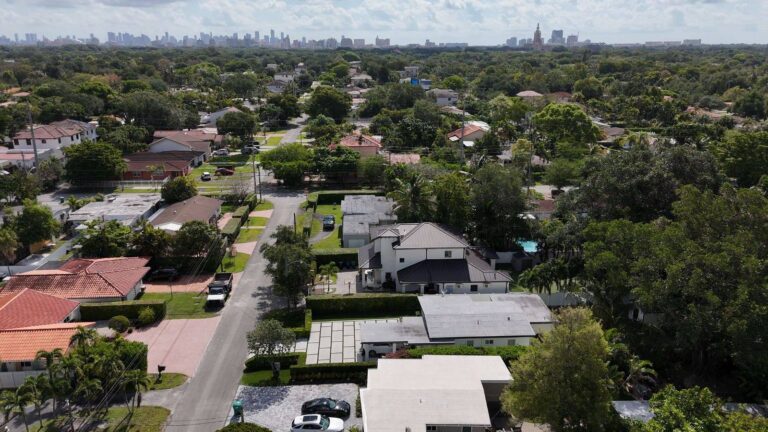
Inherited homes in Schenley Park and Coral Terrace are frequently purchased by investors, flippers, or builders. The three active buyer types in this market each approach the property differently when selling inherited home Miami real estate:
- Retail buyers with financing need the home to meet lender standards. Deferred maintenance, roof condition, HVAC age, and permit history all factor into financing eligibility and offer price.
- Investors and flippers buy at a discount to account for renovation costs and their required margin. They often move fast and close with cash, which simplifies the estate sale timeline.
- Builders in Schenley Park and Coral Terrace are specifically watching for lot-value opportunities — teardown candidates where the land itself is worth $650,000 to $850,000 or more. For an inherited home in dated condition on an attractive lot, this buyer type may produce the strongest offer.
Understanding which buyer type your inherited property realistically fits is one of the most important decisions a family makes before listing. The Schenley Park Market Report tracks current pricing, days on market, and buyer activity every month — useful context for where your inherited property sits in today’s market.
Miami-Dade Disclosure Rules Still Apply
Selling inherited home Miami property does not eliminate disclosure obligations. Even when the personal representative or heirs have limited knowledge of the home’s history, Miami-Dade requires disclosure of known material defects. Key items for Schenley Park and Coral Terrace properties specifically:
- Septic system status — most homes in 33155 are on septic, not connected to county sewer, and this must be disclosed
- Flood zone status — most of this area is in Flood Zone X, a no-flood-zone designation that is actually a selling advantage and worth highlighting
- Open permits or unpermitted work — if known, these must be disclosed regardless of contract type
- Known material defects — structural, roof, systems, or property issues the seller is aware of
Selling as-is means the estate will not make repairs after inspection — it does not waive the disclosure requirement for what is already known.
What This Means for Schenley Park and Coral Terrace Families Specifically
Selling inherited home Miami property in 33155 carries a specific advantage that many families do not fully appreciate going in: the combination of the stepped-up basis and Florida’s zero state capital gains tax often means the tax burden is far lighter than expected. For a home that appreciated from $150,000 to $900,000 over 40 years, the original owner would have faced a significant federal tax bill on a sale. Heirs who inherit and sell quickly may owe nothing at the federal level — and nothing at the state level regardless of timing.
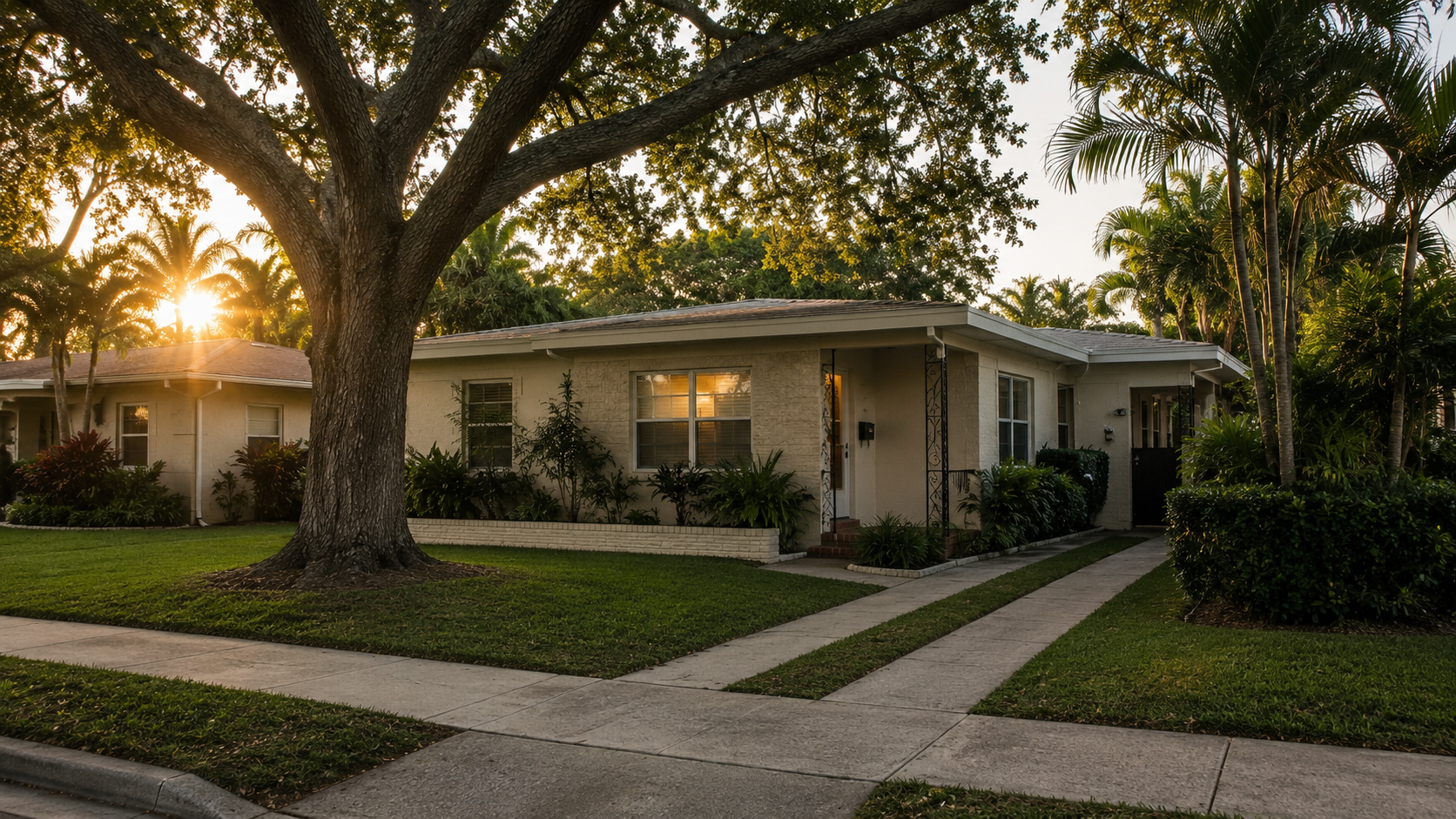
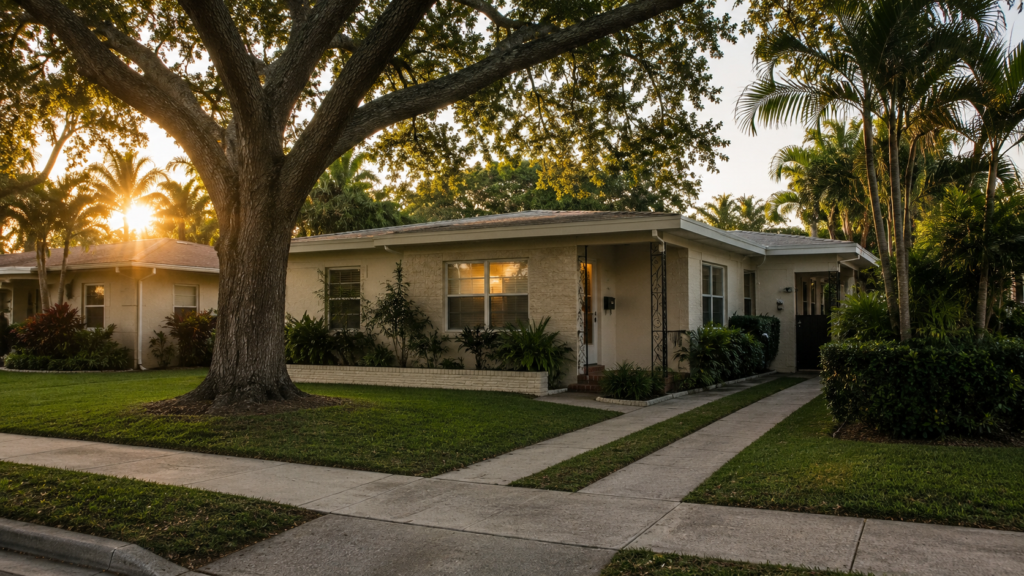
The practical challenge in Schenley Park and Coral Terrace is that inherited homes here tend to be older, sometimes in deferred maintenance condition, and often carrying decades of improvements — some permitted, some not. That combination makes the pre-listing process more layered than a standard listing, and it makes working with the right team more important.
The three professionals who need to be coordinating before any selling inherited home Miami decision is finalized: a Florida probate attorney for the legal process, a CPA for the tax picture, and a real estate agent who understands all three buyer types active in 33155 and can position the property to reach the right one from day one.
Frequently Asked Questions About Selling Inherited Home Miami Property
Do you have to go through probate to sell an inherited home in Florida?
It depends on how the property was titled. Selling inherited home Miami property titled solely in the deceased’s name typically requires Florida probate before a sale can proceed. Homes titled with a surviving joint owner, held in a trust, or subject to a Lady Bird Deed may transfer without probate.
How long does probate take in Florida?
Standard probate in Florida typically takes 6 to 12 months. Summary administration — available for estates with total probate assets under $75,000 or when the death occurred more than two years ago — can be completed in weeks. Most Schenley Park and Coral Terrace families selling inherited home Miami property should plan around the standard timeline unless summary administration qualifies.
Do heirs pay capital gains tax on an inherited home in Florida?
Usually very little or none. Selling inherited home Miami real estate benefits from a stepped-up basis — the fair market value at the date of death rather than the original purchase price. Since Florida has no state income tax or capital gains tax, the federal bill is often minimal or zero, particularly when the sale occurs close to the date of death.
Can an inherited home be sold as-is in Miami-Dade?
Yes. Selling as-is means the estate will not make repairs after a buyer’s inspection — but it does not eliminate disclosure obligations. Known material defects, septic system status, open permits, and flood zone information must still be disclosed. Investors, flippers, and builders routinely purchase as-is inherited properties in Schenley Park and Coral Terrace.
Who has authority to sell an inherited home in Florida?
The personal representative named in the will and appointed by the probate court — or, if there is no will, the administrator appointed by the court. When selling inherited home Miami property, the personal representative must have Letters of Administration before executing any sale documents.
Ready to Walk Through What Your Inherited Property Is Worth in This Market?
Selling inherited home Miami property in Schenley Park or Coral Terrace involves more moving parts than a standard listing — but it is a manageable process when the right team is coordinating from the start. If your family has inherited a home in 33155 and you want to understand what the property is likely worth and what to expect from the process, I am glad to have that conversation.
- Free instant home valuation: Request your home value
- 📞 305-301-3290
- 📧 Bere@BereHomes.com
The Schenley Park Market Report is updated every month with the latest sales data and pricing trends — a useful starting point for understanding what the inherited property is worth before any listing decisions are made.
Prefer I reach out?
Leave your details and I’ll get back to you the same business day.
Rather pick a time? Book a 15-minute call

Berenice Elguezabal
REALTOR® · Coldwell Banker Realty · Since 2001 · FL Lic. SL0695500
★ Int’l President’s Circle 2025 · Top 4% Nationwide
$150M+ career sales · 250+ closed · 7 sold in Schenley Park