Is it a Good Idea to Sell as Teardown in Miami? | Schenley Park Homes
Is My Schenley Park Home Worth More as a Teardown Than Sold Move-In Ready?
It depends on three numbers: what your house would sell for move-in ready, what a builder would pay for your lot alone, and what it would cost to get your house to move-in ready in the first place. In Schenley Park and West Miami, where 6,500-square-foot lots have sold for $650,000 and up as pure land and new construction has reached $2.5 million, land value can genuinely outpace as-is home value — but only on certain lots, and only an agent who pulls both sets of comps can tell you which side of that line your property sits on.
By Berenice Elguezabal | July 2, 2026
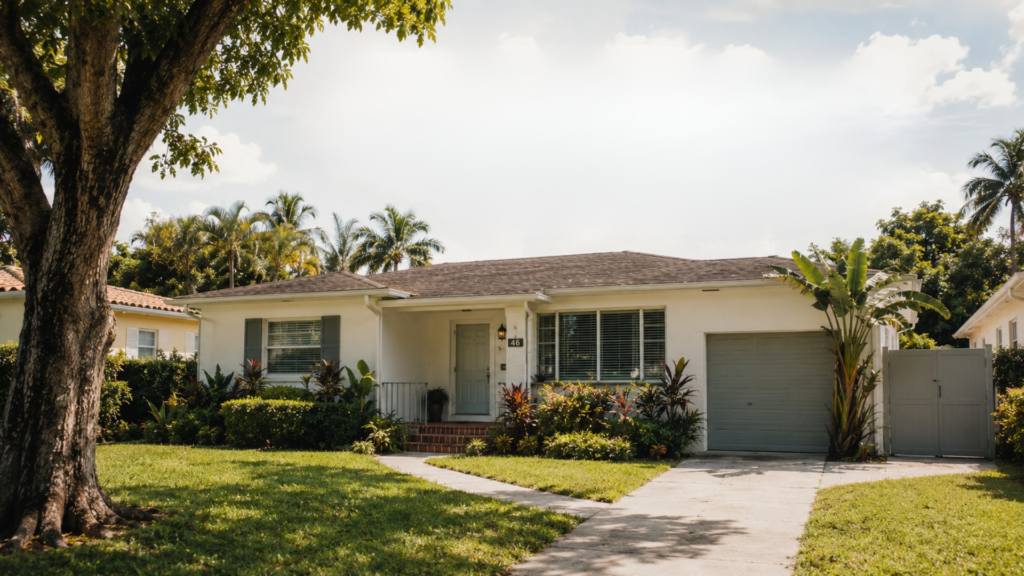
If you have gotten an unsolicited offer from a builder lately — or watched a sold sign go up on a teardown two streets over, followed a few months later by a brand-new two-story listing for well over a million — you have probably already asked yourself whether to sell as a teardown in Miami or list traditionally. In Schenley Park, Coral Terrace, and West Miami, this is not a hypothetical. This pocket of Miami-Dade has become one of the more active land-value markets in the county, and when that is happening on your block, the question stops being theoretical and starts being personal.
Here is the part that surprises a lot of sellers: there is no universal answer. Some homes in this market genuinely produce more value as a fast, as-is land sale to a builder. Others would leave real money on the table by going that route instead of investing in the home and listing it traditionally. The only way to know which camp you are in is to run the actual numbers — and that starts with understanding what those numbers are.
The Three Numbers That Decide Whether to Sell as a Teardown in Miami
Every sell-as-teardown-or-sell-as-home decision comes down to comparing three figures side by side. Skip any one of them and you are guessing.
- Your home’s as-is, move-in-ready value. What a retail buyer would pay for your home today, in its current condition, based on recent comparable sales of similarly sized, similarly located homes that have already closed in Schenley Park and West Miami.
- Your lot’s land value to a builder. What a builder or investor would pay for your property purely as a site to build on — your existing home’s condition barely factors in, because it is coming down regardless. Builders price this off lot size, location, zoning, and what they believe the finished new-construction product can sell for once built.
- The cost to bridge the gap. If your home needs work to reach move-in ready, that renovation cost has to come out of whatever a retail sale would net you — and it has to be weighed honestly, not optimistically.
Once you have real numbers for all three — not estimates from a national calculator, but numbers grounded in actual comparable sales in Schenley Park and West Miami — the answer usually becomes much clearer than it felt at the start.
The 50% Rule: A Quick Gut-Check on Renovation vs. Rebuild
Builders and renovation contractors lean on a rough rule of thumb worth knowing even if you are not planning to build anything yourself: when the cost to renovate a home climbs toward roughly 50% of that home’s current market value, it is usually a signal to seriously consider a teardown-and-rebuild approach instead of pouring more money into the existing structure.
Here is why that matters to you as a seller. If you would not renovate at that cost level, a builder evaluating your property is making the exact same calculation — except from the other direction. They are asking whether it is cheaper and more profitable to demolish and start fresh than to bring your home up to the standard their buyers expect. When the math tips that way for them, your property is often worth more to them as land than as a house — which can translate into a stronger offer than you would expect from a traditional retail sale of an older or dated home.
On the flip side, if your home is in solid, largely move-in-ready condition, that same rule works in your favor: the renovation gap a buyer would have to close is small, which supports a stronger as-is retail value and likely means a traditional sale nets you more than a land-value offer would.
What Builders Actually Look At When They Value a Schenley Park Lot
When a builder makes an offer on your property as land, they are not pricing your house at all — they are pricing the opportunity. A few of the factors that go into that number:
- Lot size and dimensions. In a market where 6,500-square-foot lots have sold for $650,000 and up as pure land, size and shape directly drive what a builder can put on the site and what they can ultimately sell it for.
- Demolition and site costs. Tearing down an existing structure typically runs in the range of $5–$15 per square foot, plus permitting. Builders bake this into their offer; a smaller, simpler structure to remove can mean a slightly stronger number for you.
- What the finished product can sell for. This is the big one. Builders reverse-engineer their offer from the new-construction sale price they expect — and in this market, that ceiling has reached $2.5 million.
- Septic and utility considerations. Much of Schenley Park sits on septic systems rather than county sewer, and builders factor connection costs, system replacement, or workarounds directly into their land-value math. The Miami-Dade Property Appraiser records can help you pull lot-specific details that inform this picture before any builder conversation.
What This Means for Schenley Park and Coral Terrace Homeowners
The decision of whether to sell as a teardown in Miami looks different in Schenley Park and Coral Terrace than it does in most other parts of Miami-Dade — and the reason is the scale of what is already happening here. When 6,500-square-foot lots are trading for $650,000 as pure dirt and new construction is regularly reaching $2.5 million on the same streets where your house has been standing for 30 years, the teardown question is not abstract. It is already happening on your block.
What that means in practical terms is that this neighborhood has a genuine three-way buyer pool: retail buyers looking for move-in-ready homes, investors running renovation math, and builders pricing lot value. Most neighborhoods in Miami-Dade have one or two of those audiences. Schenley Park consistently has all three — and which one produces the strongest offer for your specific property depends entirely on the condition of your home, the dimensions of your lot, and where both sets of comparable sales land when you actually pull them.
The Schenley Park Market Report tracks both traditional sales and land-value transactions in this area monthly — useful context for understanding where the market is before you decide which direction to pursue.
So — Which Way Should You Go?
If you are sitting on a property that is dated, would need significant work to compete as a move-in-ready listing, and is located on a lot a builder would consider attractive, choosing to sell as a teardown in Miami may genuinely be your strongest path — and possibly your fastest one, since these sales typically move with far less back-and-forth than a traditional listing.
If your home is in good, largely updated condition and would show well to a retail buyer without major investment, a traditional listing very likely nets you more — because you are capturing both the value of the structure and the value of the land beneath it, rather than handing the land value to a builder at a discount that lets them profit from the rebuild.
The honest answer for most sellers sits somewhere in the middle, and depends entirely on the specific numbers for your specific property. For more on how offers from builders, investors, and retail buyers stack up, see Investor, Builder, or Buyer? Comparing Offers in Schenley Park. For traditional listing strategy, see Top Pricing Strategies for Schenley Park Homes.
Frequently Asked Questions About Whether to Sell as a Teardown in Miami
Is my home automatically worth more as a teardown if a builder offers to buy it?
Not automatically. When you sell as a teardown in Miami, the builder’s number reflects what they believe they can build and sell on your lot, minus their costs and profit margin — not necessarily what your property could bring on the open market as a traditional listing. Comparing that offer against real comparable sales for your home as-is is the only way to know whether the number is fair.
How do I find out what my lot alone is worth, separate from my house?
This requires pulling comparable land sales — properties that sold specifically for their lot value, often to builders or investors. National online estimators cannot do this well because land value is hyper-local. A local agent who tracks these sales in Schenley Park and West Miami can build that comparison directly for your property.
What is the 50% rule, and does it apply to my situation even if I am not planning to renovate?
The 50% rule is a guideline used in renovation-versus-rebuild decisions: when the cost to bring a home up to current standards approaches roughly half its current market value, a teardown often makes more financial sense than a renovation. As a seller, this tells you how a builder is likely to view your property and whether your home is more likely to attract land-value offers or traditional buyer interest in the current Schenley Park market.
Does my home being on septic instead of county sewer affect its value as a teardown?
Yes. Builders weigh the cost and feasibility of the existing system, replacement, or connection options as part of their offer. It is also a factor that needs to be properly disclosed regardless of which direction the sale takes, and it is worth understanding before any builder conversation so you can evaluate offers accurately.
If I think my home is worth more as a traditional sale, do I need to do major renovations first to prove it?
Not necessarily — over-investing before a sale can sometimes work against you. The smarter first step is understanding where your home sits relative to both move-in-ready comps and land-value comps in Schenley Park, so any improvements target the specific gap that actually matters to your target buyer type.
Ready to Find Out Which Side of the Line Your Property Is On?
Whether you should sell as a teardown in Miami or pursue a traditional listing comes down to real numbers — not estimates, not a Zestimate, and not what a builder’s first offer says. It comes down to what the comparable sales on both sides of the equation actually show for your specific property.
- Free instant home valuation: Request your home value
- 📞 305-301-3290
- 📧 Bere@BereHomes.com
The Schenley Park Market Report is updated every month with the latest sales data, land transactions, and inventory — worth reviewing before any builder conversation.
Prefer I reach out?
Leave your details and I’ll get back to you the same business day.
Rather pick a time? Book a 15-minute call

Berenice Elguezabal
REALTOR® · Coldwell Banker Realty · Since 2001 · FL Lic. SL0695500
★ Int’l President’s Circle 2025 · Top 4% Nationwide
$150M+ career sales · 250+ closed · 7 sold in Schenley Park