What Miami Home Sellers Get Wrong About Pricing (And Why It Costs Them)
The most common home pricing mistakes Miami sellers make in the Schenley Park area come down to anchoring to the wrong reference point — an automated estimate like a Zestimate, an emotional sense of what the home is worth, or what a neighbor said they sold for — instead of what today’s actual buyer pool is paying for truly comparable properties. Retail buyers, investors, and builders are all pricing your home against different sets of numbers simultaneously, and a list price that does not account for that reality is the most common reason homes sit, get fewer showings than expected, or sell for less than a correctly priced home would have.
By Berenice Elguezabal | July 10, 2026
After more than 25 years working this market, I can tell you that pricing conversations are where most listings are won or lost — long before the first showing happens. The home pricing mistakes Miami sellers make are rarely about greed. They are about anchoring to the wrong number, for understandable reasons that just do not hold up against how buyers in this specific market actually shop and value property.
Here are the five pricing mistakes that cost Schenley Park sellers the most — and what to anchor to instead.
Home Pricing Mistakes Miami Sellers Make Most Often
Mistake 1: Trusting an Automated Estimate Over Local Market Reality
Zestimates and similar automated valuations are a starting point, not a pricing strategy. They are built from broad data sets and cannot account for what is actually happening on your specific block — investor activity, recent teardown sales, lot value trends, or the condition-specific factors that drive real offers.
In the Schenley Park area, this gap matters more than in most markets because the range of what a property can be worth is unusually wide. The same general size and lot might be worth $650K as a teardown to a builder, significantly more as a renovation project to an investor, or up to $2.5M as a finished new construction comp — depending entirely on the property’s condition, lot characteristics, and which buyer type it realistically fits. According to the National Association of Realtors, sellers who rely on automated valuations rather than local market analysis are among the most likely to experience extended days on market and eventual price reductions. An automated estimate cannot make the distinctions that determine your actual number. A current, local market analysis can.
Mistake 2: Pricing Based on What You Need Instead of What the Market Will Pay
It is natural to think about your number first — what you owe, what you want to walk away with, what the next move costs. But buyers do not know or care what you need. They are comparing your home to other available options and recent sales, and they will price accordingly regardless of your situation.
When sellers price based on their target net rather than current market value, the home typically sits — and homes that sit longer tend to sell for less than they would have at a realistic starting price, not more. Buyers and their agents read extended days on market as a signal to negotiate harder. The math sellers are trying to protect by pricing high often ends up working against them.
Mistake 3: Anchoring to What the Neighbor Got Without Verifying It
This comes up constantly in Schenley Park, and it is understandable — word travels in a tight-knit area. But secondhand sale prices are frequently inaccurate, incomplete, or outdated by the time they are being repeated. They may not account for seller concessions, the actual condition of that property versus yours, whether it sold to a retail buyer versus an investor or builder, or how long it sat before that number was reached.
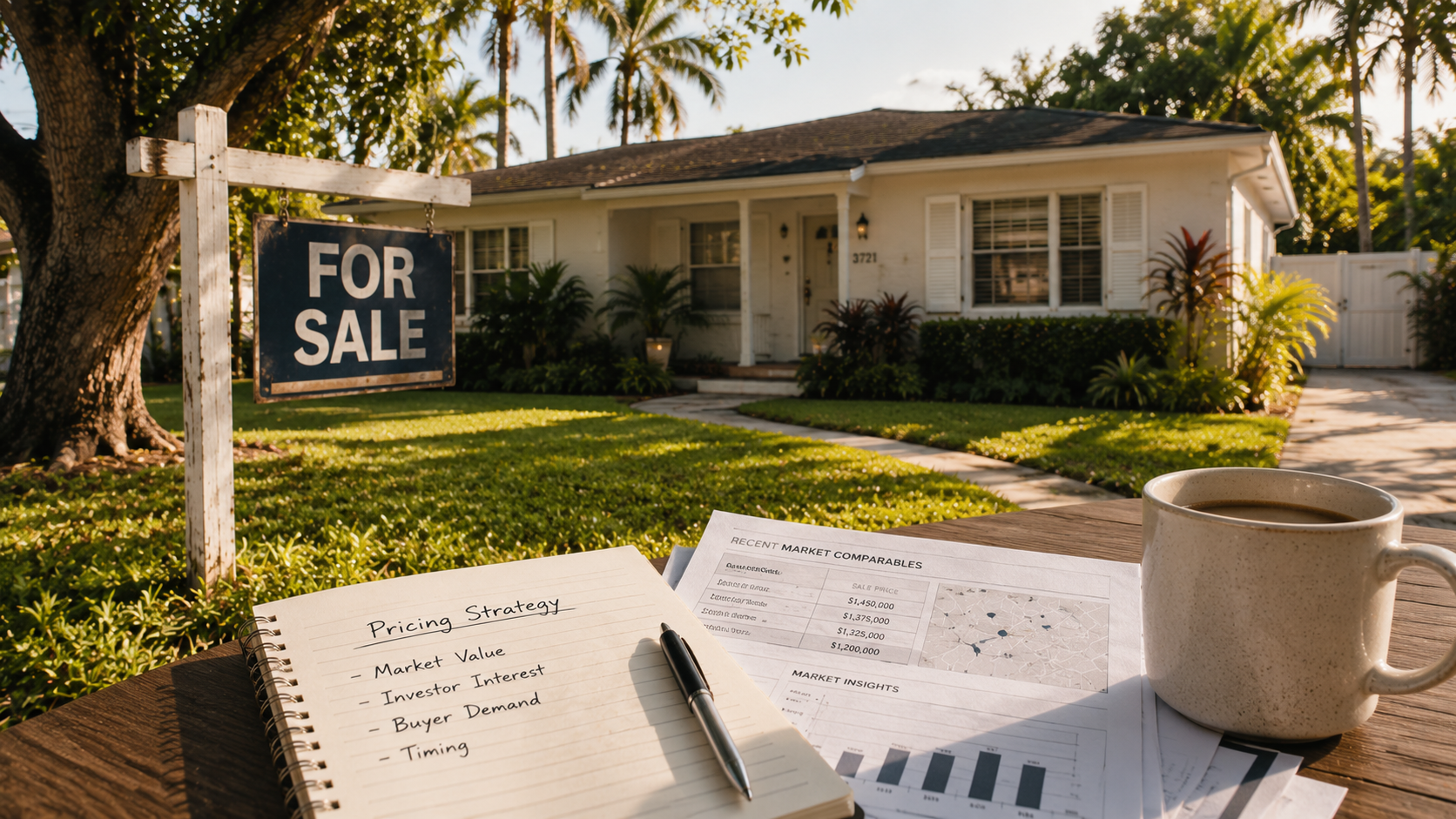
What matters instead: verified, recent comparable sales — and the context behind each one. A $1.4M sale two streets over might reflect a fully renovated retail-ready home, while your home is a stronger fit for an investor or builder at a different price point entirely. Both numbers can be real and still not apply to your situation.
Mistake 4: Not Accounting for the Three Buyer Types Pricing Your Home Differently
This is one of the home pricing mistakes Miami sellers make that is particularly costly in Schenley Park — and it is where a lot of sellers leave money on the table without realizing it. Your home is not being priced against one market. It is being evaluated by three distinct buyer types, each running their own math:
- Retail buyers compare your home to similar move-in-ready properties and what their lender’s appraisal will support.
- Investors and flippers subtract their renovation costs and required margin from what they believe the renovated home will resell for.
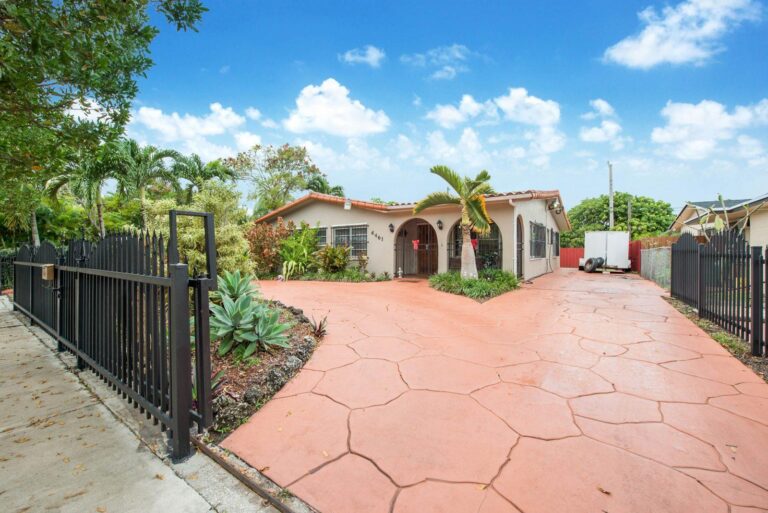
- Builders are often pricing the land — and in this area, lots as small as 6,500 square feet have sold for $650K and up on land value alone.
A price that makes sense to one buyer type may be completely off for another. Sellers who do not understand which buyer type their home realistically fits often price in a way that filters out the very buyers most likely to pay the most for their specific property.
Mistake 5: Treating the List Price as an Opening Bid Instead of a Positioning Decision
Some sellers price high on purpose, assuming they will negotiate down to where they actually want to land. In today’s market — where buyers and their agents have access to more data and more comparable listings than ever — this strategy frequently backfires. An overpriced listing does not generate competing offers that drive the price up. It generates silence, followed by a price reduction that buyers read as a signal that something is wrong.
The list price is a positioning decision, not an opening bid. Pricing accurately from the start tends to generate more interest, more competitive offers, and — counterintuitively to many sellers — a stronger final number.
What This Means for Schenley Park and Coral Terrace Sellers
The home pricing mistakes Miami sellers make are more consequential in Schenley Park and Coral Terrace than in most neighborhoods — because the spread between a correctly priced home and an incorrectly priced one is wider here than almost anywhere else in Miami-Dade.
A Schenley Park home that is priced as a retail listing but realistically belongs in the investor or builder category will sit. It will not appear in the search filters serious investors use. It will not attract the cash buyers who move quickly and need little from the property conditionally. It will accumulate days on market, and those days will eventually force the price reduction that buyers were waiting for — often to a number below what the home would have commanded at the right price from day one.
The flip side is equally true. A home that is underpriced for retail and positioned as a teardown when the structure could attract a strong retail buyer leaves money on the table in the other direction. Getting this right — understanding which of the three buyer types your specific property fits and pricing accordingly — is what separates a sale that closes well from one that drags.
The Schenley Park Market Report tracks current pricing trends, days on market, and buyer activity by property type every month — the most useful context for understanding where your home sits before you agree on a number.
What Accurate Pricing in Schenley Park Actually Looks Like
Avoiding home pricing mistakes in Miami starts with a current, verified read on four things:
- Recent comparable sales — and the context behind each one: buyer type, condition, concessions, days on market before offer.
- Current inventory — how your home compares to what is actively competing for the same buyers right now.
- Buyer type fit — which of the three buyer audiences (retail, investor, builder) your specific property realistically attracts, and what each one is paying.
- Current market conditions — what the Schenley Park Market Report shows for pricing trends and absorption rate in your price range.
This is the analysis I walk every seller through before we agree on a number — because the number is not the goal. The outcome is.
Frequently Asked Questions About Home Pricing Mistakes Miami Sellers Make
Why should I not trust my Zestimate when pricing my Schenley Park home?
Automated estimates use broad data sets and cannot account for what is happening on your specific block — recent investor or builder activity, teardown sales, lot value trends, or your home’s actual condition. In the Schenley Park area, these home pricing mistakes Miami sellers make based on automated numbers can push a list price significantly off in either direction.
Is it better to price high and negotiate down, or price accurately from the start?
Pricing accurately from the start consistently produces a stronger result. Overpriced homes generate less interest, sit longer, and typically require a price reduction — which buyers read as a signal to negotiate harder, not softer. The math that sellers try to protect by pricing high often ends up working against them.
How do I know if my home is more valuable to an investor, a builder, or a retail buyer?
It comes down to your home’s condition, your lot’s size and characteristics, and what is currently happening with comparable properties in Schenley Park and Coral Terrace. This is exactly what a current local market analysis is built to answer — and it is the conversation that should happen before any list price is set.
Does pricing my home higher protect my negotiating room?
Not usually — it tends to do the opposite. An overpriced listing generates fewer showings and fewer offers, which weakens your negotiating position rather than strengthening it. The sellers with the most negotiating leverage are typically the ones who priced accurately and generated competing interest from the start.
What is the most reliable way to find out what my Schenley Park home is actually worth?
Start with a current, local market analysis that uses verified recent sales, today’s inventory, and an honest assessment of which buyer type your property realistically fits. A free home valuation is a useful starting point — not a Zestimate, not a secondhand number from a neighbor, but real comparable sales data for your specific property.
Ready to Price Your Schenley Park Home Correctly From the Start?
Avoiding home pricing mistakes in Miami starts with one conversation — one that puts real comparable sales in front of you instead of a generic online estimate. The right number is not the highest number. It is the number that attracts the right buyer, generates real interest, and gets you to the closing table with the strongest possible outcome.
- Free instant home valuation: Request your home value
- 📞 305-301-3290
- 📧 Bere@BereHomes.com
Prefer I reach out?
Leave your details and I’ll get back to you the same business day.
Rather pick a time? Book a 15-minute call

Berenice Elguezabal
REALTOR® · Coldwell Banker Realty · Since 2001 · FL Lic. SL0695500
★ Int’l President’s Circle 2025 · Top 4% Nationwide
$150M+ career sales · 250+ closed · 7 sold in Schenley Park