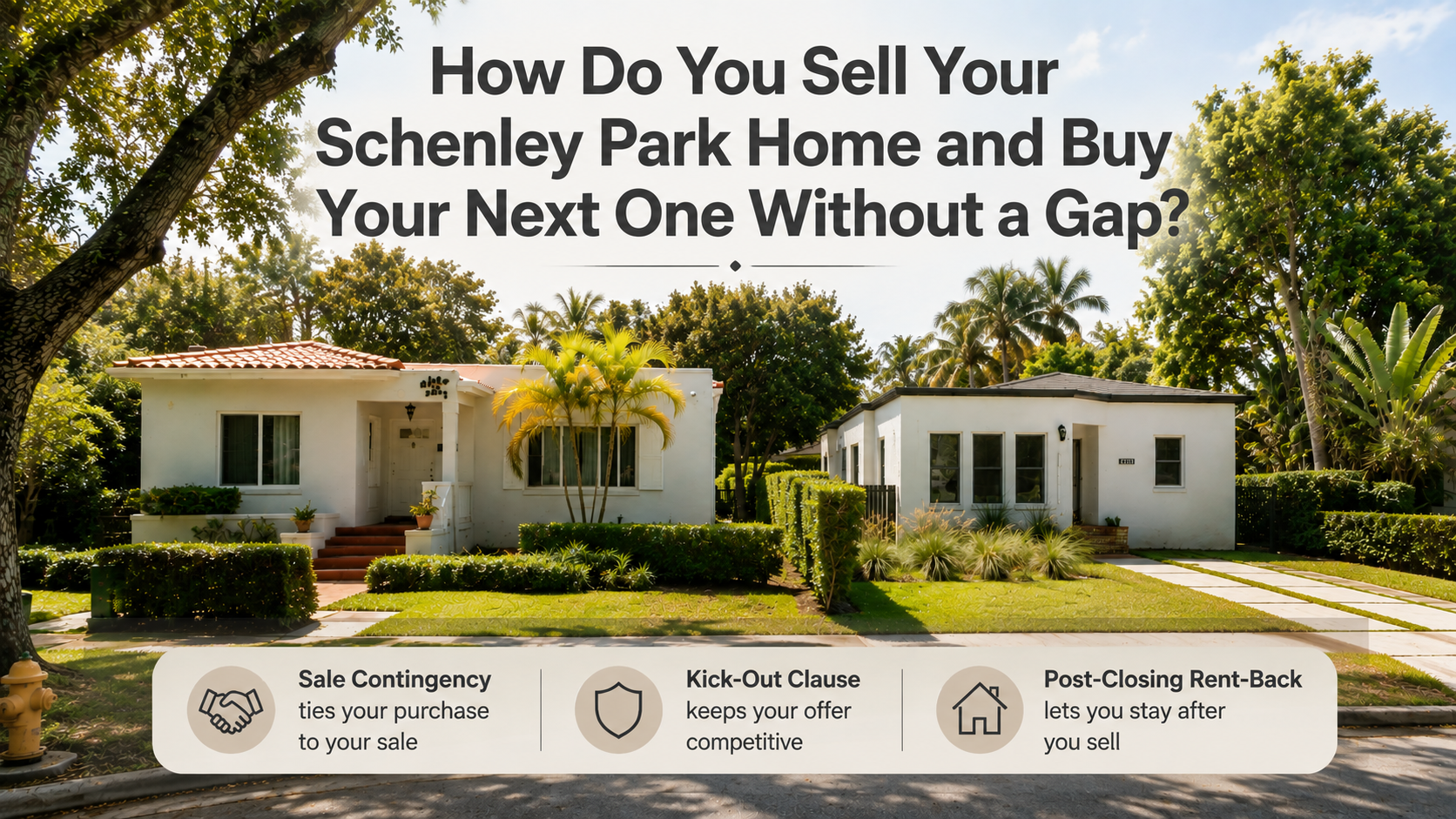
How Do You Sell Your Schenley Park Home and Buy Your Next One Without a Gap?
Three tools handle most of the buying and selling home Miami timing challenge: a sale contingency using Florida’s Sale of Buyer’s Property Rider that ties your purchase to your home selling first, a kick-out clause that protects the seller of your next home while still giving you room to sell, and a post-closing rent-back agreement that lets you stay in your current home for a negotiated period after it closes. Which combination works depends on how competitive your target home is and how quickly your Schenley Park property is likely to sell.
By Berenice Elguezabal | August 25, 2026
This is one of the most stressful parts of selling, and I hear it from almost every Schenley Park homeowner who is trading up, downsizing, or relocating within Miami-Dade: you do not want to be carrying two mortgages, but you also do not want to sell and end up with nowhere to go. The buying and selling home Miami timing gap is where most of the anxiety in this process actually lives.
The good news is that Florida real estate contracts have specific tools built for exactly this situation — and understanding which tool fits your specific circumstances is where the planning has to start.
Buying and Selling Home Miami: The Contingency Options and How They Actually Work
Sale Contingency
In Florida, this is built using the Sale of Buyer’s Property Rider attached to your purchase contract. It makes your offer on the next home contingent on your current Schenley Park property selling and closing. This is the most protective option for you — but also the least attractive to the seller of the home you are trying to buy. In a competitive market, a sale-contingent offer can be a significant disadvantage.
Settlement Contingency
If your Schenley Park home is already under contract but has not closed yet, this is a lighter-weight version — your new purchase is contingent on your existing sale closing, not on finding a buyer in the first place. Sellers view this as meaningfully less risky, because the buyer has already been found. For most buying and selling home Miami situations in Schenley Park, getting your current home under contract first and then moving to a settlement contingency is the smoother, lower-risk sequence.
Kick-Out Clause
This is what makes a sale contingency palatable to the seller on the other side. It lets them keep marketing their home while your contingency is in place, and if a better, non-contingent offer comes in, they can invoke the clause. You then typically get 48 to 72 hours to remove your contingency or step aside. For most Schenley Park sellers, pairing a sale contingency with a kick-out clause is the realistic path when the next home is competitive but not immediately in multiple-offer territory.
The Rent-Back Agreement: Buying Yourself Time After Closing
If your home sells before you have found or closed on your next one, a post-closing occupancy agreement — commonly called a rent-back — lets you stay in your current home after the buyer takes ownership, paying them rent for an agreed period. For buying and selling home Miami homeowners in Schenley Park, this is one of the most practical tools available when the sale-to-purchase timeline does not line up cleanly.
A few things matter here specifically in Florida:
- It has to be in writing and signed. A handshake agreement is not enforceable.
- There is a real time limit. Most conventional lenders will not allow a rent-back longer than 60 to 90 days, because beyond that window the home stops qualifying as owner-occupied for the buyer’s financing.
- The agreement should spell out the rent amount, utilities, maintenance, security deposit, and a firm move-out date — ideally with a daily penalty if you overstay. If you do not leave on time, the buyer’s recourse is to demand possession in writing and, if necessary, pursue a formal eviction under Florida Statute §83.56.
Cash buyers, investors, and builders — common in Schenley Park given the teardown and land-value activity here — are often more flexible on rent-back terms than a financed retail buyer, since they are not managing a lender’s owner-occupancy timeline.
Other Ways to Close the Timing Gap
- Bridge loan. Lets you access equity in your current home before it sells, giving you funds for a down payment on the next one without a contingency at all. The buying and selling home Miami bridge loan path works well when your current home is likely to sell quickly and you do not want to lose a competitive next home to a contingency-free competing buyer.
- Extended closing dates. On either side of the transaction, extending the closing timeline by a few weeks can sometimes close a small gap without needing a formal rent-back.
- Current market timeline data. Knowing how long homes in your specific pocket of Schenley Park typically take to sell is essential before you commit to any sequence. The Schenley Park Market Report tracks monthly days-on-market data for this area — the most accurate local reference for building a realistic timeline before you list.
What Buying and Selling Home Miami Looks Like in Schenley Park Specifically
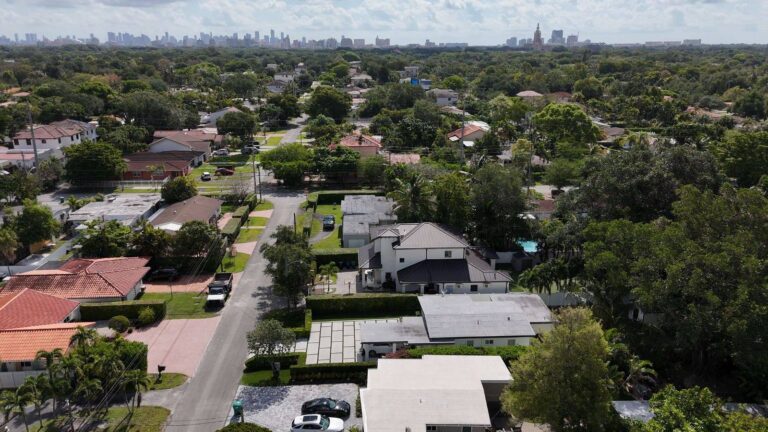
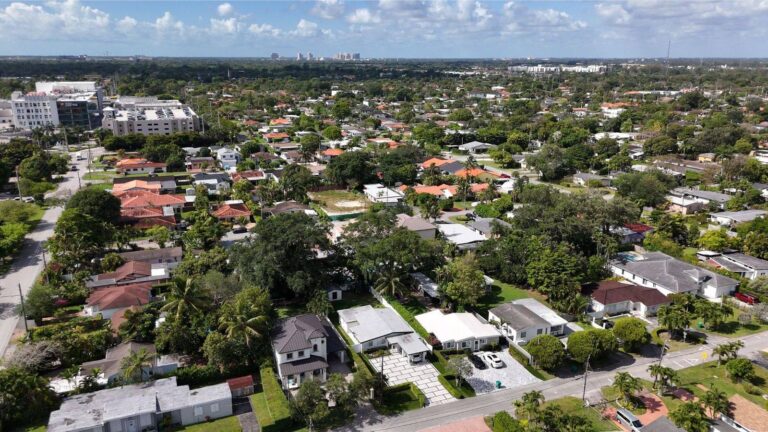
The buying and selling home Miami coordination challenge has a specific texture in Schenley Park and Coral Terrace that is worth understanding before you map out your sequence. The buyer pool in 33155 includes retail buyers financing the purchase, cash investors, and builders evaluating lot value — and which type of buyer you attract affects how flexible your post-closing arrangement can be.
A cash investor or builder buying your Schenley Park home will generally be more flexible on rent-back duration, possession timing, and move-out terms than a financed retail buyer whose lender is monitoring owner-occupancy status. If your situation requires meaningful post-closing time in the home, that flexibility should factor into how you evaluate offers — not just the price.
On the buying side, the level of competition in your target neighborhood and price range determines how much contingency risk the seller there will absorb. A non-contingent offer, whether backed by a bridge loan or by an already-closed sale, will consistently outperform a sale-contingent offer in the same negotiation. Getting your Schenley Park home under contract first — before writing an offer on the next home — is almost always the sequence that gives you the most leverage on both sides of the transaction.
Frequently Asked Questions About Buying and Selling Home Miami at the Same Time
Can I make my home purchase contingent on selling my Schenley Park home first?
Yes, using Florida’s Sale of Buyer’s Property Rider, which ties your purchase contract to your current home selling and closing. It is the most protective option in the buying and selling home Miami process, but the least attractive to the seller of the home you are buying — so it is often paired with a kick-out clause to make the offer more competitive.
How long can I stay in my house after closing with a rent-back agreement?
Most conventional lenders cap rent-back periods at 60 to 90 days, since beyond that window the home stops qualifying as owner-occupied for the buyer’s financing. Cash buyers and investors, common in Schenley Park, are often more flexible on this timeline since they are not constrained by a lender’s owner-occupancy requirements.
What happens if I do not move out on time after a rent-back period ends?
The buyer’s first step is typically a written demand for possession, often backed by a daily penalty specified in the signed occupancy agreement. If you still do not vacate, the buyer can pursue formal eviction proceedings under Florida Statute §83.56. This makes spelling out a clear move-out date and penalty structure in the written agreement essential before you close.
Is a cash buyer more flexible on rent-back timing than a financed buyer?
Generally yes. Cash buyers, investors, and builders are not bound by a lender’s owner-occupancy financing timeline, which often makes them more willing to negotiate flexible move-out terms. In the buying and selling home Miami context for Schenley Park, where cash and investor buyers are active, this flexibility is worth factoring into how you evaluate competing offers.
Should I sell my home first or find my next home first?
For most Schenley Park sellers, getting your current home under contract first — then using a settlement contingency or rent-back on the next purchase — is the smoother, lower-risk sequence. A settlement contingency is far more attractive to sellers than a sale contingency, and having your home under contract gives you a firm timeline to work from when you make your next offer.
Ready to Map Out the Right Sequence for Your Move?
There is no single right answer for every buying and selling home Miami situation — it depends on how quickly your home is likely to sell, how competitive your next purchase is, and how much flexibility you actually need between transactions. This is exactly the kind of planning worth doing before you put a sign in the yard, not after you are already under contract and the clock is running.
- Free instant home valuation: Request your home value
- 📞 305-301-3290
- 📧 Bere@BereHomes.com
The Schenley Park Market Report is updated every month with days-on-market data and inventory levels — the most accurate local reference for building a realistic sale timeline before you commit to a sequence.
Prefer I reach out?
Leave your details and I’ll get back to you the same business day.
Rather pick a time? Book a 15-minute call

Berenice Elguezabal
REALTOR® · Coldwell Banker Realty · Since 2001 · FL Lic. SL0695500
★ Int’l President’s Circle 2025 · Top 4% Nationwide
$150M+ career sales · 250+ closed · 7 sold in Schenley Park