
Selling Before Foreclosure in Miami-Dade: Your Options
Can I sell my Miami-Dade home before the foreclosure auction? Yes. In Florida you can sell at any point before the Clerk issues the certificate of sale, and the sale pays off the lender at closing. For homeowners in the Schenley Park area, also called Coral Terrace, in Miami, FL 33155, the real question is usually not whether a sale is possible, but whether there is enough time and equity to do it well, and which kind of buyer fits your timeline.
Most homeowners who call me about foreclosure wait too long to call. They are embarrassed, they are hoping a loan modification comes through, or they have been told the process takes years. Then a final judgment arrives and an auction date is on the calendar.
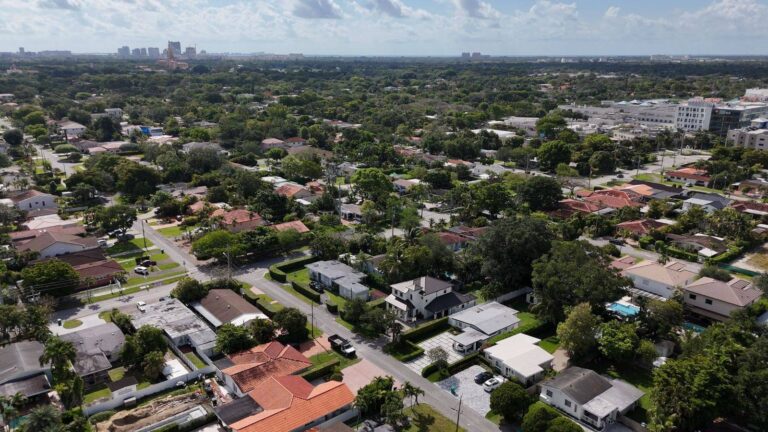
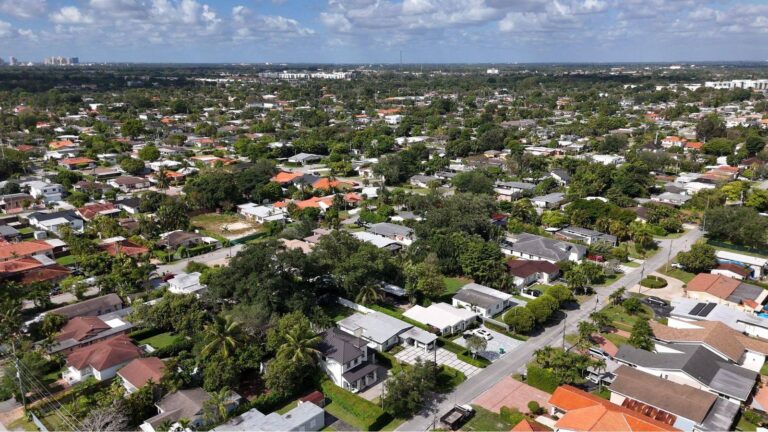
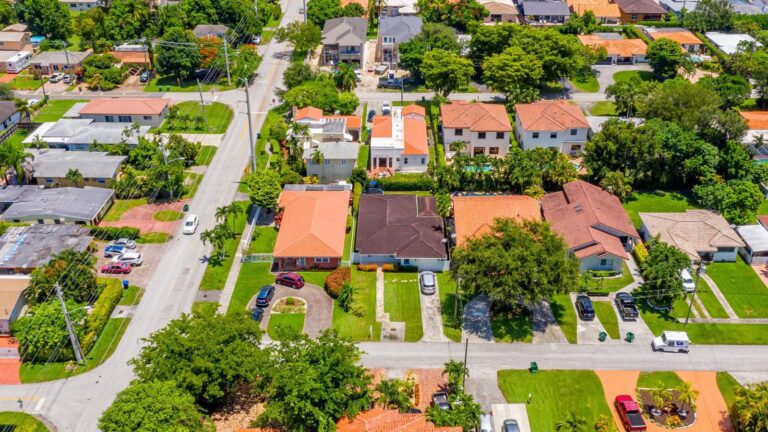
Here is what does not get said enough: in the Schenley Park area, also called Coral Terrace, in unincorporated Miami-Dade County, ZIP 33155, many owners facing foreclosure are not underwater. Lot values are strong on this side of the county, so there is often real equity in the house. A foreclosure auction does not protect that equity. A sale you control usually does.
How a Miami-Dade foreclosure moves
Florida is a judicial foreclosure state, which means the lender has to go through the courts. The case starts with a complaint, a lis pendens recorded in the public records and a summons served on you. In Florida you generally have 20 days to respond to the summons. If you do not, the court can enter a judgment without hearing your side.
After a final judgment, the Clerk of Court schedules an online auction and publishes a notice of sale. The sale is complete when the winning bidder pays, and the Clerk then issues a certificate of sale.
Two rules matter most if you are thinking about selling:
- You can redeem until the certificate of sale is issued. Under Florida Statute 45.0315, you can stop the sale by paying the full amount of the judgment plus interest, fees and costs, unless the judgment sets a different time. A sale that closes before then pays off the lender and ends the case.
- There is usually a runway before a case is filed. Under federal mortgage servicing rules, a servicer generally cannot make the first filing for foreclosure until a borrower is more than 120 days delinquent. Those months are the cheapest time to sell.
A lis pendens does not stop you from selling. It means the closing has to pay off the lender and the case has to be dismissed or the judgment satisfied. Your title company and a foreclosure attorney coordinate that, which is one more reason to bring them in early.
Your four options
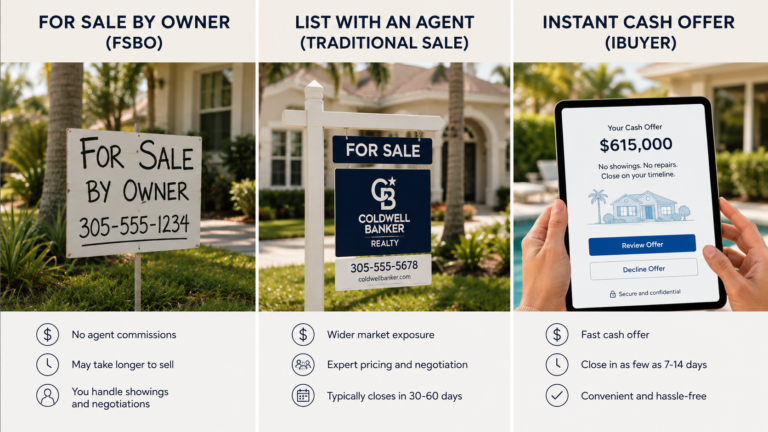
1. List and sell on the open market. If you owe less than the home is worth and you have time, this almost always nets you the most. Your payoff and the usual selling costs come out of the proceeds. In Miami-Dade that includes documentary stamps at $0.60 per $100 of the price on a single-family home, about $4,200 on a $700,000 sale. My seller net proceeds guide walks through every line.
2. Sell to a cash buyer or builder on a short timeline. This is where 33155 differs from much of Miami. Builders and investors buy here as-is and can close in a couple of weeks, and the value of the lot gives you a floor. The trade-off is price: you are selling speed, and a cash offer usually comes in below what a retail buyer would pay. My post on selling as a teardown shows how the lot math works, and my guide to vetting a cash buyer’s offer lists what to check before you sign.
3. Short sale. If you owe more than the home will bring, the lender has to approve selling for less than the payoff. It is slower, requires a hardship package and the lender controls the timeline. It needs an experienced agent and an attorney, and in this area it is the least common path because equity is the norm.
4. Reinstate or redeem. If a family member, a refinance or a lump sum can bring the loan current or pay off the judgment, you keep the house. It is the right answer only if you can afford the home going forward.
There is also a deed in lieu of foreclosure, where you hand the property to the lender voluntarily. It can end the debt, but you give up your equity, so I would only look at it when there is none.
How to decide, step by step
- Find out exactly where you are. A missed payment, a filed complaint, a final judgment and a scheduled auction have very different clocks. Ask your attorney or look up your case on the Clerk’s website.
- Get a real value. Do not rely on an online estimate. A home valuation from me includes both the retail value and the land value, because the gap between them can be large here.
- Subtract the payoff. Get a written payoff from your servicer, and the judgment amount if there is one. Your equity is the value minus the payoff minus your selling costs.
- Match the buyer to the calendar. With several months, list it and price it right; overpricing is the main reason these sales fail, as I explain in my post on pricing mistakes. With only weeks, compare a fast cash sale against the cost of losing the house at auction.
- Watch for rescue scams. Be careful with anyone who asks you to sign over your deed, pay a large fee up front or “rent back” your own house. Have a Florida attorney review any agreement before you sign.
If the numbers say you will walk away with money, a sale beats an auction almost every time. If the auction date is close, it is not too late, but every week you wait narrows your choices.
Frequently asked questions
Can I sell my house if it is in foreclosure in Florida?
Yes. A lis pendens or a pending case does not stop a sale. The closing pays off the lender from the proceeds, and the case is dismissed or the judgment satisfied. Your title company and a Florida attorney handle the paperwork.
How long do I have to sell before the auction?
Under Florida Statute 45.0315, you can redeem until the Clerk issues the certificate of sale, unless the judgment sets another time. In practice you need a closing date before the auction, so start as soon as you know a case has been filed.
Will I lose my equity if the house is sold at auction?
Not automatically. Money left over after the lender and other lienholders are paid may be claimed by the former owner, but the deadlines are short and auction prices are often below market value. A sale you control usually protects much more of your equity. Talk to an attorney quickly if an auction has already happened.
Is a short sale or a regular sale better?
A regular sale is better whenever the home is worth more than you owe, which is common in 33155. A short sale only makes sense when the payoff is higher than the realistic sale price and the lender agrees to take less.
Do I still have to make disclosures if I sell during a foreclosure?
Yes. You still owe the standard disclosures, including known defects, septic and flood information. Selling under time pressure does not remove those duties.
Let's talk about your home
- Home valuation: Request your home value
- Call or WhatsApp: 305-301-3290
- Bere@BereHomes.com
This article is general information, not legal or tax advice. Foreclosure, bankruptcy and deficiency questions should go to a Florida attorney, and tax questions to a CPA.
Prefer I reach out?
Leave your details and I’ll get back to you the same business day.
Rather pick a time? Book a 15-minute call

Berenice Elguezabal
REALTOR® · Coldwell Banker Realty · Since 2001 · FL Lic. SL0695500
★ Int’l President’s Circle 2025 · Top 4% Nationwide
$150M+ career sales · 250+ closed · 8 sold in Schenley Park