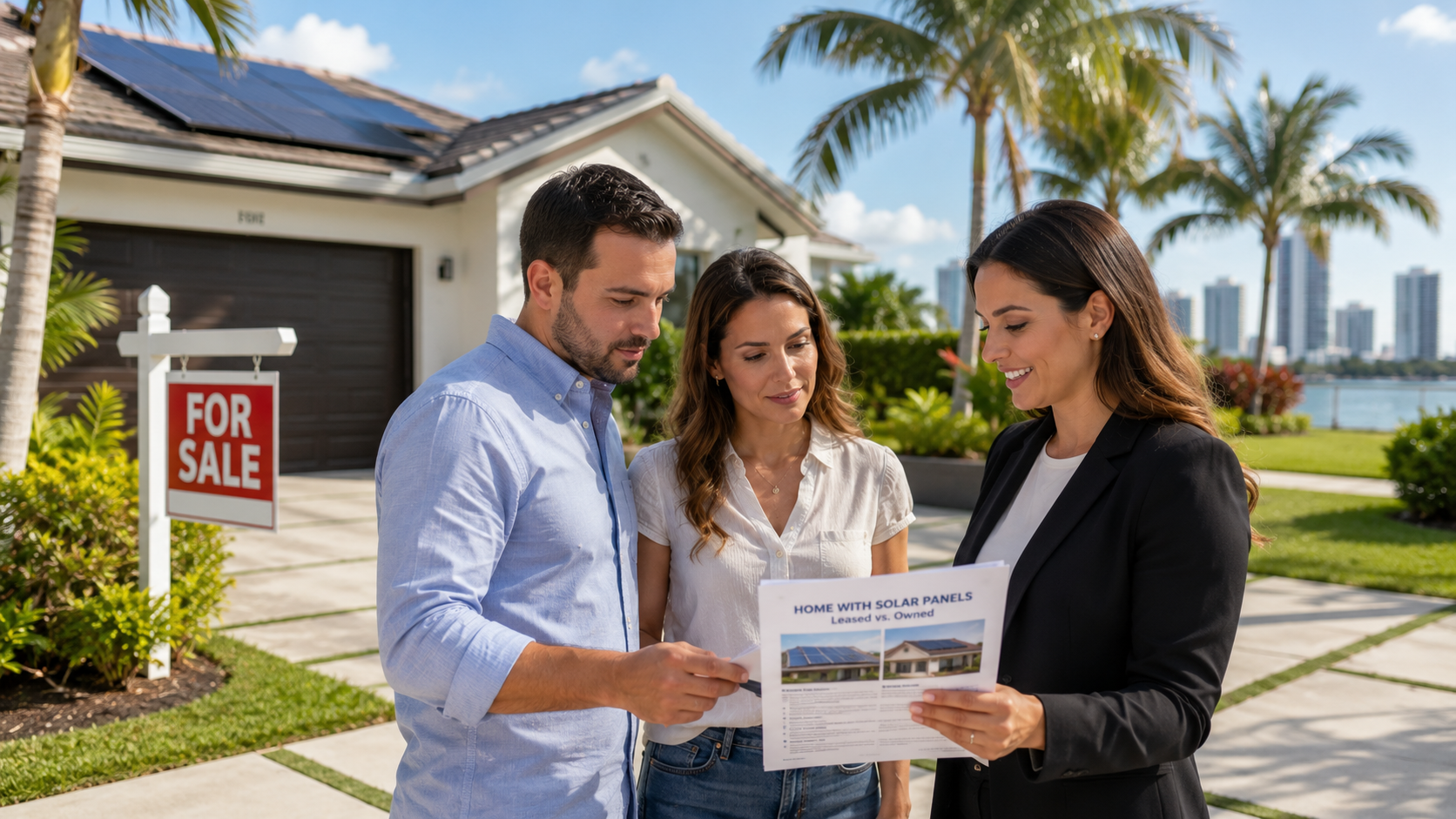
Selling Your Schenley Park Home with Solar Panels: Leased vs. Owned and What Miami Sellers Must Do
Solar panels are showing up on more and more homes in Schenley Park and Coral Terrace — and they’re quietly becoming one of the most complicated items to navigate at closing.
It’s not that solar panels hurt your sale. Done right, they can be a genuine selling point in a market where Miami buyers are already worried about insurance and utility costs. The problem is when sellers don’t know what they have — owned or leased — and don’t loop in their agent and title company early enough.
Here’s everything you need to know before you list.
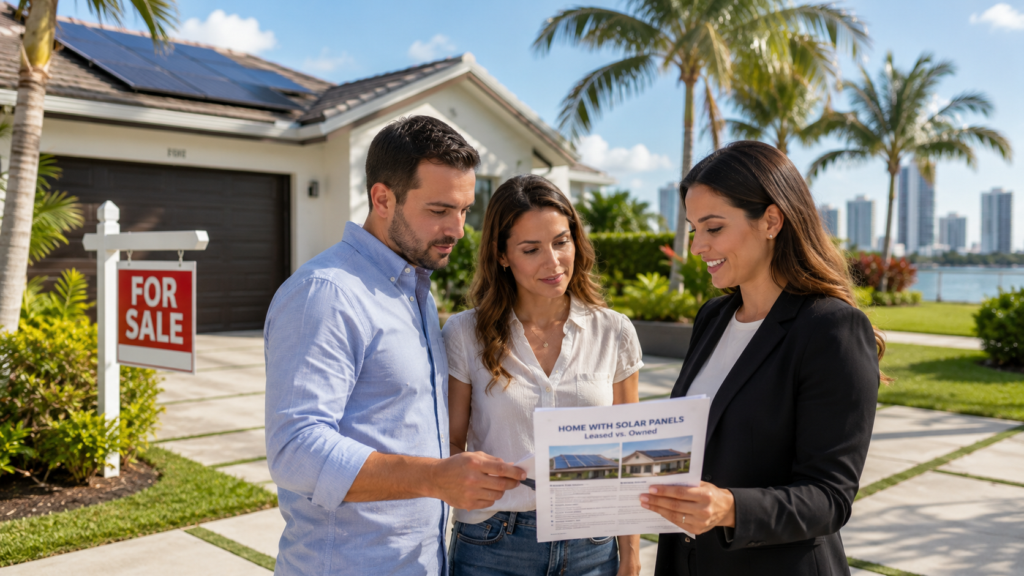
Owned Panels vs. Leased Panels — The Difference That Changes Everything
If you own your solar panels outright, they transfer with the home as a fixture, just like your kitchen cabinets or your HVAC system. From a legal standpoint, they’re part of the real property. The buyer gets them.
There’s one important catch: if you financed the panels with a solar loan, the lender likely filed a UCC-1 Financing Statement against your property. This is a public record that shows up on your title search as a lien. Your title company will identify it and require it to be resolved at closing — either paid off from your proceeds or transferred as part of the buyer’s assumption.
If you lease your solar panels, the solar company owns them. You have been paying a monthly fee to use them. At closing, you have two options: the buyer can assume the lease, or you can buy out the lease and transfer the panels as owned property.
Lease assumption requires the buyer to submit a credit application to the solar company, get approved, and sign a new lease agreement. The solar company controls this process — not you, not your agent, not the title company. And solar companies don’t always move fast.
The 45-Day Rule — Why You Have to Start Early
Here’s where things go wrong: sellers find out they have a solar lease during the listing period, their agent mentions it to the buyer’s agent, and everyone assumes it’ll get worked out. Two weeks before closing, the solar company still hasn’t approved the transfer.
The process — from notifying the solar company to completed paperwork — typically takes 2–4 weeks. But delays are common. The safe approach is to notify your solar company a minimum of 45 days before your target closing date. That means starting the conversation before you even go under contract.
What you need to do as soon as you decide to sell:
- Pull out your solar agreement. Is it a lease, a PPA (power purchase agreement), or a loan?
- Contact your solar company and let them know you’re selling
- Ask what the transfer or buyout process looks like and what your current payoff or remaining lease balance is
- Tell your listing agent and title company immediately — they need to account for this in the closing timeline
What Shows Up on Your Title Commitment
Florida title companies run lien searches as part of every transaction. If you have a solar loan, the UCC-1 filing will appear in that search as a requirement to closing. The title company can’t issue a clear title until that lien is addressed.
This doesn’t mean the deal is in trouble — it means there’s a process to follow. But if neither the seller nor the agent knew about the UCC-1 filing, discovering it during the title search (often 2–3 weeks before closing) puts everyone in a scramble.
The title company will coordinate with the solar company to:
- Terminate the existing UCC-1 filing
- Record a new one in the buyer’s name (if the buyer is assuming a solar loan)
- Or confirm payoff if the lien is being cleared This is standard now — experienced Miami-Dade title companies handle solar transfers regularly. But it only goes smoothly when there’s enough lead time.
What to Disclose — and Why Florida Law Requires It
Under Florida’s disclosure laws, an active solar lease, PPA, or UCC-1 lien on your solar panels is a material fact that affects the value and desirability of the property. It must appear on your Seller’s Property Disclosure form.
This is not optional. Sellers who fail to disclose a solar lease and allow a buyer to close thinking the panels are owned free and clear are exposed to post-closing legal claims.
The disclosure should include: the type of agreement (lease, PPA, or loan), the monthly payment, the remaining term, and whether the agreement is transferable.
Does Having Solar Panels Help or Hurt Your Sale?
In Miami’s current market, the answer depends on what type of solar arrangement you have.
Owned panels (no lien): Generally a positive — buyers see a lower utility bill and no monthly solar payment. It’s a feature, not a complication.
Solar loan (UCC-1 lien): Neutral to slightly complicated — the buyer needs to understand they’re assuming a payment obligation. Transparent disclosure and a clean transfer process make this manageable.
Leased panels: Mixed. Some buyers are happy to assume a low monthly payment for reduced electricity costs. Others don’t want any additional obligation. In a buyer’s market like 33155 — where buyers have plenty of options — a lease that’s complicated to transfer or has unfavorable terms can be a friction point.
The key is knowing what you have, disclosing it properly, and starting your pre-listing preparation early enough to avoid delays.
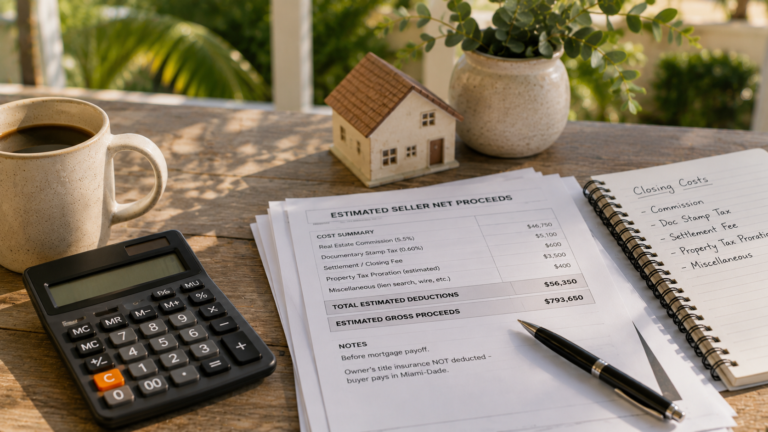
Your solar arrangement also feeds directly into your net proceeds calculation — a buyout of your solar lease comes out of your check at closing, just like paying off a mortgage.
Frequently Asked Questions
Do I have to disclose my solar lease when selling my home in Florida?
Yes. An active solar lease, PPA, or UCC-1 solar loan lien is a material fact under Florida disclosure law and must appear on your Seller’s Property Disclosure form. Failing to disclose a solar lease that affects the buyer’s obligations or the property’s title is a legal liability.
Can a buyer refuse to assume my solar lease in Florida?
Yes. Buyers are not required to assume your solar lease. If the buyer declines to assume the lease and you don’t want to buy it out, it can become a deal-breaker. Knowing this before you list allows you to decide whether to buy out the lease, price the home accordingly, or market it to buyers who understand solar.
How long does a solar lease transfer take at closing in Florida?
The solar company’s approval and paperwork process typically takes 2–4 weeks, but delays are common. Most solar professionals and real estate attorneys recommend notifying your solar company at least 45 days before your target closing date to avoid delays.
What happens to a UCC-1 solar lien at closing?
A UCC-1 lien from a solar loan will show up on your title commitment as a requirement to closing. Your title company will coordinate with the solar company to either terminate the existing filing (if the loan is paid off) or record a new one in the buyer’s name. This is a standard process in Florida — it just needs adequate lead time.
What’s the difference between a solar lease and a solar PPA in Florida?
With a solar lease, you pay a fixed monthly amount for the use of the panels regardless of how much power they produce. With a PPA (power purchase agreement), you pay per kilowatt-hour of electricity the panels generate. Note: Florida has restrictions on third-party power sales thatlimit PPA availability in some areas, making leases more common in Miami-Dade.
Solar panels don’t have to complicate your sale — but they do require a little more preparation upfront. Find out what type of arrangement you have, contact your solar company, and tell your listing agent early. That’s the whole formula.
I help Schenley Park and Coral Terrace sellers navigate every detail like this before we list — so nothing shows up as a surprise in the closing timeline.
Want to know what your home would net today, solar arrangement and all? Get your free home valuation
Prefer I reach out?
Leave your details and I’ll get back to you the same business day.
Rather pick a time? Book a 15-minute call

Berenice Elguezabal
REALTOR® · Coldwell Banker Realty · Since 2001 · FL Lic. SL0695500
★ Int’l President’s Circle 2025 · Top 4% Nationwide
$150M+ career sales · 250+ closed · 7 sold in Schenley Park