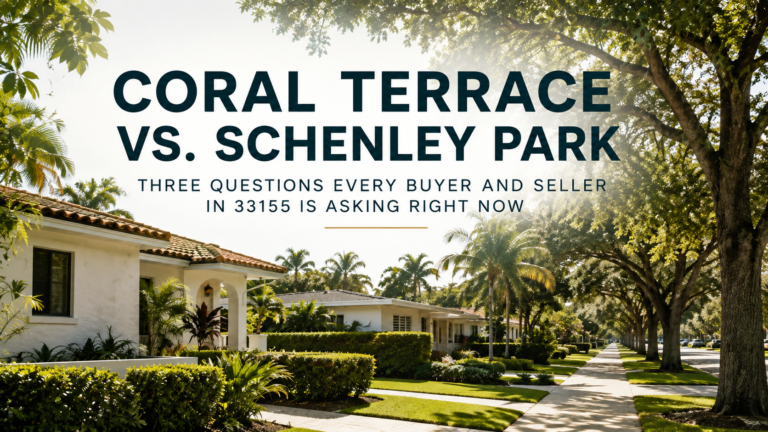
Sell First or Buy First When Downsizing in Miami, FL 33155?
If you are downsizing from a Schenley Park home in Miami, FL 33155, selling first is the safer choice for most owners. You know your exact net proceeds, you can make a clean offer on the next home, and you avoid paying for two houses in a market where the homes that closed in August 2026 had been listed for an average of 228 days. Buying first makes sense only when you can carry both homes for six to twelve months, with cash or a bridge loan, or when the next home is truly hard to replace. Most sellers close the gap with a rent-back after closing, a longer closing date or a short-term rental.
By Berenice Elguezabal | September 8, 2026
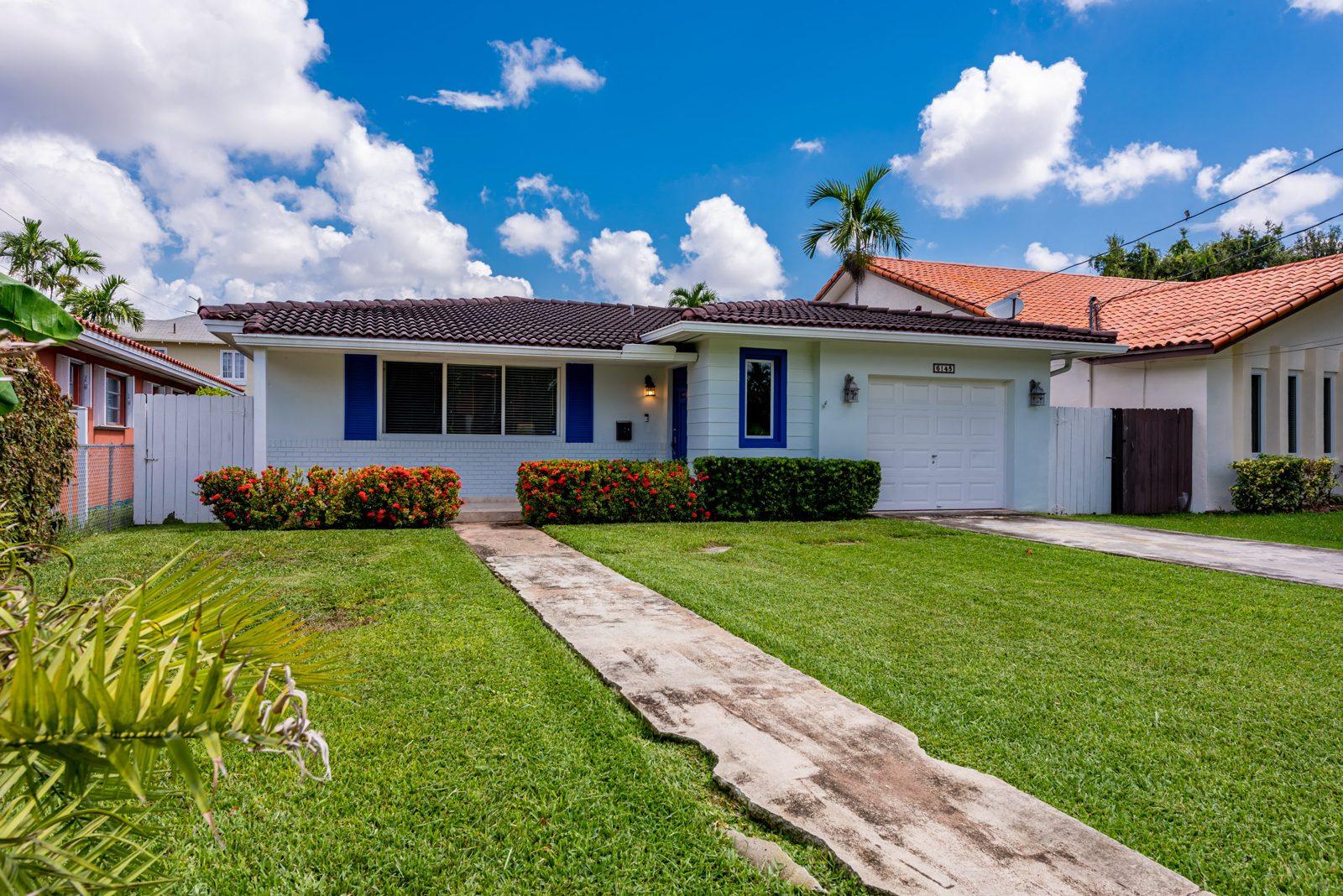
It is the first question almost every downsizer asks me: do I sell my house first, or find the next place first? Both paths work. The right one depends on your equity, your cash and how specific your next home has to be. Here is how I walk Schenley Park and Coral Terrace owners through it. If you are trading up rather than down, my guide to buying and selling a home in Miami at the same time covers the same tools from that side.
The short answer for Schenley Park owners
Start with what the neighborhood is doing. The August 2026 Schenley Park market report shows a balanced market, not a weak one: For the newest figures, see my September 2026 market report.
- The year-to-date average sale price was $1,149,571, up 1.1% over 2025. Your equity is intact.
- Months of supply was 4.15, down from 7.48 a year earlier.
- The homes that closed in August had been on the market an average of 228 days.
- 84 listings expired this year against 40 closings, almost always because of price.
In other words, the value of your home is the predictable part and the timeline is not. Selling first takes the unknown out of the plan: once your home is under contract you know your number and your date, and everything else is built around them.
Option 1: Sell first
Why it usually wins
- You know your real number. Your purchase budget is based on actual net proceeds, not a hope. My seller net proceeds guide shows what comes off the top at closing.
- Your offer on the next home is stronger. A buyer who does not need to sell first can compete on terms, not just price.
- You never pay for two homes. No second round of property taxes, insurance, utilities and upkeep on a house that is sitting empty.
- One move, on a date you control.
The real risk: where you live in between
Selling first means solving the gap between your closing and your move-in. These are the options I negotiate most often:
- A rent-back after closing. The buyer lets you stay for an agreed number of days, sometimes for rent. The FR/BAR contract has a Post-Closing Occupancy by Seller rider for this. If you use that rider, agree on the terms in the offer itself: if the parties cannot agree on them by the contract deadline, either side can cancel.
- A longer closing. Many buyers, especially cash buyers and builders, will accept a 60 to 90 day closing if the price is right.
- A short-term furnished rental near family or near the new area, so you can buy without pressure.
- Timing both closings on the same day, which is possible when the next home is a condo or villa with several options on the market.
One caution: if the arrangement is written as a lease, Florida’s residential landlord-tenant law applies. For a short stay after closing, a simple occupancy agreement prepared by your closing attorney or title company is usually cleaner.
Option 2: Buy first
When it makes sense
- You can afford both homes for six to twelve months from savings or investments.
- Your Schenley Park home is paid off, which is common for owners who bought decades ago, and you are comfortable borrowing against it.
- The next home is rare, such as a single-story villa near your children, and you do not want to lose it.
How owners pay for it
- A bridge loan. Terms usually run six to twelve months, with rates from about the prime rate to prime plus two points, and lenders generally want you to keep 15% to 20% equity in your current home (Bankrate).
- A home equity line of credit. Open it before you list. Many lenders will not open a line on a home that is already for sale.
- Cash or a line backed by investments. Talk to your financial advisor about taxes and timing before you draw on either.
The cost of waiting
If your home takes as long to sell as the August average, you are paying taxes, insurance, utilities and maintenance on an empty house for seven or eight months. Check your homeowners policy too: many policies limit coverage when a home sits vacant for more than 30 to 60 days, so tell your insurer before you move out.
Option 3: Buy with a sale contingency
The FR/BAR Sale of Buyer’s Property rider makes your purchase depend on your current home closing by a set date. If it does not close by that date, you have three days to cancel in writing and get your deposit back. If you miss that window, the contingency disappears and you are committed to the purchase.
Sellers accept these offers more easily in a balanced market like today’s 33155, and far more easily when your home is already under contract. Expect them to ask for a kick-out clause, which lets them keep marketing and ask you to drop the contingency if a stronger offer arrives. My advice is simple: get your Schenley Park home under contract first, then write the contingent offer. It turns a weak offer into a credible one.
Which path fits your situation
| Your situation | What I usually recommend |
|---|---|
| You need the sale proceeds to buy the next home | Sell first, with a rent-back or a longer closing |
| Your home is paid off and you can carry both homes for a year | Buying first is realistic, with a bridge loan or cash |
| Your next home is a condo or villa with many options | Sell first and buy during your closing period |
| Your next home is rare or very specific | Buy first, or make a sale-contingent offer once your home is under contract |
| Your home has open permits or needs repairs | Sell first, and clear the permits before you list |
Two things to line up before either path
- Your homestead portability. In Miami-Dade you can transfer up to $500,000 of your Save Our Homes benefit to a new Florida homestead established within three assessment years, and the application is due March 1 (Miami-Dade Property Appraiser). Read how portability works for Miami-Dade sellers.
- Your capital gains exposure. The primary-residence exclusion is up to $250,000 for single owners and $500,000 for married couples who meet the ownership and use tests. Long-time owners can exceed it, so read capital gains on a Miami home sale and check with your CPA before you set your budget.
- Your permits. Open or expired permits can delay a closing by weeks. See how open permits affect a Miami sale.
How I help Schenley Park downsizers coordinate both moves
Downsizing is two transactions that have to fit together. I start with a home valuation built from actual 33155 closings and a net sheet, then map the timeline backward from the date you want to be in your next home. From there I negotiate the pieces that make the gap disappear: the closing date, the rent-back, and the contingency language if you buy first. You can see the full approach on my Schenley Park downsizing page, and my 12-month downsizing plan covers everything that happens before the house goes on the market.
Frequently asked questions
Should I sell my house before buying when I downsize in Miami?
For most Schenley Park owners, yes. Selling first gives you an exact net number, lets you buy without a sale contingency and avoids paying for two homes. Buy first only if you can comfortably carry both homes for six to twelve months, or if the next home is hard to replace.
How long can I stay in my home after closing in Florida?
There is no fixed legal limit. It is whatever you and the buyer agree to in writing, usually a few days to a few weeks, sometimes with daily or monthly rent. The FR/BAR contract has a Post-Closing Occupancy by Seller rider for this, and many closing attorneys prefer a separate written occupancy agreement.
Will a seller accept an offer that depends on selling my Schenley Park home?
Sometimes. A sale-contingent offer (the FR/BAR Sale of Buyer’s Property rider) is far easier to accept when your home is already under contract and the market is balanced, as 33155 was in August 2026 with 4.15 months of supply. Expect the seller to ask for a kick-out clause so they can keep marketing.
Can I get a HELOC on a house that is listed for sale?
Usually not. Many lenders will not open a home equity line on a property that is currently listed. If you plan to use your equity to buy first, open the line before your home goes on the market.
Does selling first affect my homestead portability?
Not if you plan for it. In Miami-Dade you can transfer up to $500,000 of your Save Our Homes benefit if you establish a new Florida homestead within three assessment years of giving up the old one, and the portability application is due by March 1.
Whether you sell first or buy first, the plan starts with an honest number for your home. If you are thinking about downsizing from Schenley Park or Coral Terrace, let’s put that number together first.
- Home valuation: Request your home value
- 📞 305-301-3290
- 📧 Bere@BereHomes.com
This article is general information for Miami-Dade homeowners, not legal, tax or lending advice. Confirm your situation with your attorney, CPA or lender.
Prefer I reach out?
Leave your details and I’ll get back to you the same business day.
Rather pick a time? Book a 15-minute call

Berenice Elguezabal
REALTOR® · Coldwell Banker Realty · Since 2001 · FL Lic. SL0695500
★ Int’l President’s Circle 2025 · Top 4% Nationwide
$150M+ career sales · 250+ closed · 7 sold in Schenley Park